
Binding Tips for Trans Guys
Updated: Mar 19
Binders are compression tank shirts aimed at flattening and compressing the breasts to form a flat chest shape. Binders come in a wide variety of colors and nudes. Binders typically either look like half tanks (similar to a sports bra) or a full tank shirt. Binders are important tools for many trans guys to achieve masculine presentation, though they do come with POTENTIAL health risks. In this article you will read about the caring and keeping of binders, as well as various places to buy them and alternative methods of flattening your chest.
Table of Contents
(click to jump)


Wear and Care for a Binder
You can wear a binder like any other undergarment/bra. Put it on in the morning (or whenever you're ready to go out) and take it off when you get home. There may be some mild discomfort in your chest when you first start wearing a binder, but that's pretty normal - your breasts are being smushed against your chest, and depending your cup size that can feel quite different from person to person.
from Amor Sensory from Trans Guy Supply from Sock Drawer Heroes from Trans Guy Supply from Spectrum Outfitters
Modeling how to wear a binder, in various body shapes and binder colors. Cred in each photo.
To care for your binder, wash it periodically like you would with a bra. It's not recommended to throw it into the washing machine. Putting it in the washing machine can temporarily tighten the fabric, but in the long run it slowly frays it. The best recommended practice is to wash it in the sink with a cup of detergent.
Plug your sink (if you can)
Fill with warm to hot water
Add cup of your favorite clothing detergent
Add binder(s)
Swish around and scrub to remove dirt and grime
Let soak for a little while
Remove binders, drain sink
Rinse binders off in the sink with warm or cold water
Throw over the bar of your shower (or clothesline) and allow to dry. This will take several hours (and sometimes overnight), but you can speed up the process with a hair dryer.
Proper Binder Sizing
It is incredibly important to get a binder that fits you well! A binder that is too small can cause long-term damage to your ribs and lungs, and a binder that is too big won't compress your chest effectively!
Each binder supplier has their own chart for determining which size you should purchase, but Spectrum Binders has a handy conversion method for your general reference. Use a measuring tape or a cord of string to take your measurements. In between measurements? Go up a size!
For reference: "Chest (Bust)" measurement refers to the measurement around your torso over the largest part of the breast, typically over the nipple. "Rib" measurement refers to the circumference of your torso underneath the breast tissue.
The two charts below have been provided from Spectrum Outfitters. These charts should serve as a reference guide and not a definitive answer to what size binder to buy. This is because different binder manufacturers have their own sizing chart for their own product. When buying a binder, please consult the individual manufacturer's sizing chart before making a purchase.
Inches

Centimeters

Where NOT to Buy Binders
Improperly binding can have many risks, including shortness of breath, general discomfort, rib pain, long-term damage to the ribcage and muscles surrounding it, and skin irritation. Always make sure to get a binder that is comfortable and fits well.
There are many places online that sell binder or binder-equivalent items. NEVER bind with Ace bandages or duct tape - both of these will cause harm to your chest and may cause complications if you ever pursue top surgery.
Similarly, binders with clasps on the side cause uneven pressure and may result in the aforementioned negative side effects. Binders with clasps in general are not recommended. Zippers on the front or back are fine, but a good binder should look and act like a very tight shirt with no zippers or clasps.
If you go onto a site like Amazon and see a binder labelled something like "FTM binder breast roleplay bra for tomboy elastic woman binder" - do not buy it. Paying a little extra to a reputable company will be worth it in the long term!
DO NOT BUY THESE PRODUCTS TO BIND YOUR CHEST WITH!
Companies that sell Binders
All prices listed are in USD.
Amor Sensory
Who: Amor Sensory is a company run primarily by Andy Amor, an autistic nonbinary artist and designer.
At this moment, it appears there are no products on the website. Check back later.
gc2b
Who: Founded in 2015 by a Black and Latinx trans man based in Maryland, USA. gc2b were the first binders to be designed and patented specifically for gender-affirmation.
Price Range: $37 - $47; sometimes on sale.
Check out some reviews here and here.
For Them
Who: Run by queer people, for queer people. They are a queer, Black and trans owned and operated business with the mission of supporting queer folks to live authentically and find their voices in a vibrant, inclusive space. According to their site, they use eco-friendly fabrics, dyes, and sustainable production methods.
Price Range: $55 - $64; discounts if you are a member.
Check out a review here.
Sock Drawer Heroes
Who: Started in 2018 and based in Australia and run by a trans and gender-diverse team, Sock Drawer Heroes are sensory friendly and size inclusive.
Price Range: $47 - $57; sometimes goes on sale.
Check out a review here.
They also have a Pay It Forward Program!
Spectrum Outfitters
Who: Based in the UK and by a trans man with comfort and safety in mind. Does also ship to the US and Europe. Proudly uses recycled materials to make binders. For every order they plant one tree.
Price Range: $35 - $46; sometimes goes on sale.
Check out some reviews here and here.
Underworks
Who: Founded over 20 years ago. Not specifically trans-centric (or owned) but offers affordable options and is widely recognized by major organizations.
Price Range: $18.33 - $38.33
Check out some reviews here.
How to Make your Own Binder
For those who like a good challenge or are unable to buy a chest binder through conventional means, making your own binder at home can be a relatively inexpensive way to achieve a masculine chest shape.
Tutorial courtesy of @thendyn on Tumblr.
You will need:
Sewing machine -- you can try to sew this by hand, but a sewing machine will make the process a LOT easier
Cotton or other non-stretchy fabric
The type of fabric is up to you, but cotton is inexpensive and is good at supporting the chest. You do not want to purchase any sort of synthetic, polyester, or otherwise athleticwear-type of material, as they will both stretch out and absorb a lot of sweat.
The length of fabric you purchase is dependent on your measurements. Always buy more fabric than you think you'll need.
Zipper, to be stitched on
Thin elastic fabric (to make the shoulder straps), approx. 1-inch across
Tape measurer (soft)
Clothing iron
How to Sew a Binder:
Take your bust (across the chest) and rib (under the breasts and around your torso) measurements in inches or centimeters. Download THIS SPREADSHEET. Input your measurements into the top three boxes and the sheet will calculate how much fabric and other materials you need.
On the sheet, "bust" is called "Underbust".
Measure and cut your fabric. Because the binder uses a double layer of fabric it's important that you remember which way you'll need to fold it to get it to be the length you want. If you can't remember, measure both sides and see which one matches the second 'Fabric' measurement
(On the inches table, this is cell E8)
Fold the fabric in half, pin it, and sew along the long edge (the one you just folded in half). Don't sew the short edges. The spreadsheet will give you about 1/2-inch seam allowance, so keep this in mind when sewing.

Turn the fabric inside out and iron flat.
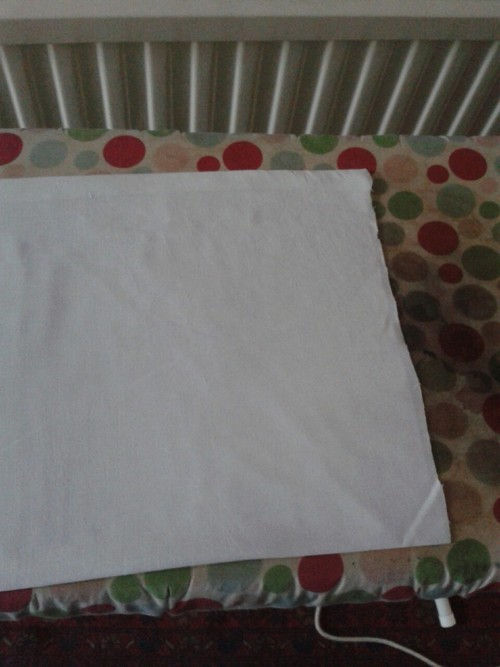
Open one end of the fabric and fold it inside about an inch or so to make a seam.
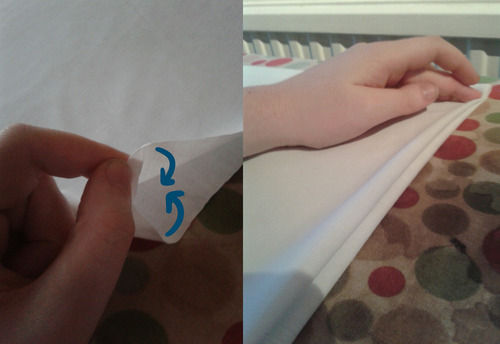
Iron the seam flat, and repeat on the other side.
With the seams ironed in, this folded fabric should be as long as half your underbust measurement.
Cut the elastic to length - you will need six (6) strips, each the same length. (If your binder is quite long, maybe use five for each side instead, so ten (10) in total). The measurement on the spreadsheet is called 'back elastic length', and will give you an inch seam allowance at either end.

Pin the elastic between the two layers of cotton (so in the seam-space you just ironed) at the top, middle and bottom of the binder. Then, sew two long lines running from top to bottom, ensuring that they go over the elastic strips - one should be close to the edge of the fabric, and one a centimeter or so further in.
Repeat on other side of the fabric.

Now that the elastic is sewed into the fabric it's time to attach the zip! Start by placing the zip in the middle of the fabric and then folding the edges slightly so that you can see where the ends of the elastic would be sewed to it - hold the elastic in place with your hands and measure between the edge of the zip and the seam of the fabric. Compare this length to the measurement called 'raw length' and trim as needed.

Mark with pencil where the elastic will be sewed to the zip, then repeat with the other straps.
Sew the elastic on twice, like when sewing it to the fabric. This time, sew one length normally and other other using a wider stitch that crosses between the fabric of the zip and the elastic. This will make sure that the elastic does not fray when being washed.

Repeat with the other strips of elastic.
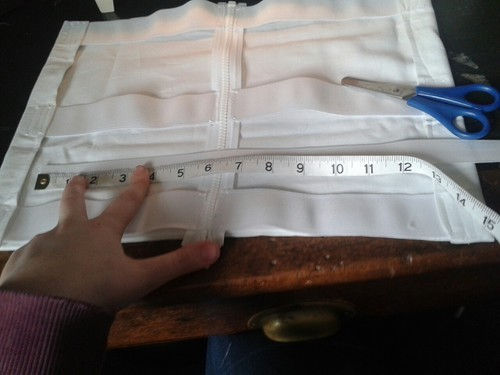
Measure and cut the lengths of the shoulder straps. The measurement is called 'shoulder elastic' on the spreadsheet, and you will need two (2) of them. The spreadsheet is designed for top-of-shoulder-to-armpit length measurements. If you measured front-to-back, just half your measurement.
Align the zip so that it is dead center on the fabric, and measure about 2 inches out to either side of it. Mark these points on the top-most band of elastic. Use these to ensure that the two shoulder straps are the same distance apart from the zip and pin them in place. Remember, you have an inch seam allowance to use.

Sew the shoulder straps much like you did when attaching the elastic to the zip, but use two narrow sewed line things and once that crosses between the elastic of the back straps and the shoulder straps.

Turn the binder over and repeat steps 14 through 16 again, but this time place the straps an extra inch or so apart.

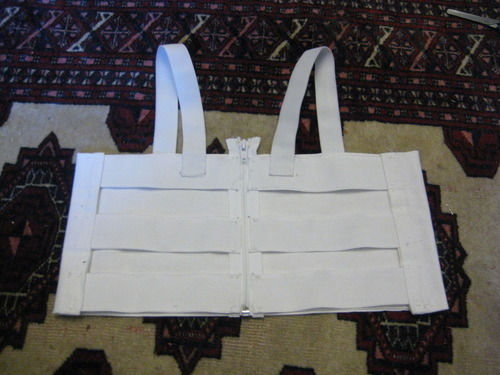
(optional) Accessorize your new binder with fabric paint, embroidery (avoiding critical binding structures), or anything else to zhuzh it up!
Congratulations! You just made your first binder!
How to get a Binder for Free
There are quite a few non-profit organizations and resources that have free binder funds for trans people in need. If you are both unable to buy a binder through conventional means or make one yourself, consider getting a chest binder through these channels. Some of these organizations have very specific requirements for application, so please check carefully when researching.
Applications open year-round
Requirements:
You identify as transgender (FTM, genderqueer, non-binary, genderfluid, gender non-conforming, and every other non-cis identity within the trans umbrella.)
You cannot afford to purchase a binder, or you cannot safely obtain a binder.
Must be 18 years or older to request a binder
Applications open year-round
1 chest binder per person, per year
Only ships to specific US states: MN, WI, IA, SD, & ND
Binding with (Good) Tape
Believe it or not, you can actually bind with tape - BUT - it has to be the correct kind of tape. As mentioned before, binding with material like duct tape or ace bandages will cause harm to your chest.
Companies such as TransTape have solved the issue of not wanting to wear a binder by making strong adhesive tape that is safe for your body and provides the same amount of compression that any regular binder would give. These tapes can be worn for multiple days without the risk of causing permanent damage to the chest muscles. A single roll of tape can last multiple weeks, depending on how frequently a person binds and how large their chest is.
You will also need to purchase oil (baby oil works fine) for removing the tape. Be gentle on removal! You want to minimize pulling and tearing of hair/skin as much as possible. You can also buy nipple guards (aka pasties) to further protect your body.
Looking for a tutorial on how to apply and remove binding tape? TransTape has an extremely in-depth video tutorial on their website!
Trans Tape
Who: Founded in 2017 by Kaiyote Jackson after realizing he was trans, but didn't like the discomfort of wearing binders. TransTape is waterproof, hypoallergenic, 95% cotton, with medical-grade adhesive.
Based in Maine, USA.
Price Range: Single roll: $14.50 - $19.99; they offer kits/bundles for more money.
Check out some reviews here and here.
KT Tape
Who: Founded in 2008 for athletes (not necessarily trans people) suffering from sports injuries. Based in Utah, USA.
Price Range: $13.99 - $119.99
Check out a review here.
Binding FAQ
How long can I bind for?
Experts recommend not binding for more than eight (8) hours per day. We realize that sometimes dysphoria may get bad on some days and you may fall asleep in your binder. Don't worry, a day or two of doing that won't negatively effect you - but it will if this becomes a repeated habit. If you feel any aches or pains in your chest, take a break for one or a few days!
Is binding dangerous?
Binding is not inherently dangerous, when done safely. If you have a binder in the correct size, you don't wear it for much longer than eight hours a day, and you're not regularly being winded while wearing it, it'll be no different on your body than simply wearing an especially tight sports bra.
Though if you do feel any prolonged pain, take a short break.
Are you SURE binding with duct tape/Ace bandages is unsafe?
Yes, we are very sure. Doing it one time, like sleeping in a binder, will not damage you in the long term, but doing it repeatedly will. Improper binding can lead to bruised and warped ribs, compression of the lungs, fluid buildup in the lungs, skin irritation, and muscle pain.
Binding improperly can also put you at risk for being unable to get top surgery (double mastectomy) in the future. We know that dysphoria really sucks, but your physical health is far more important.
Still unsure about binding with tape/bandages? Check out this Quora chain for more info.
Can I swim/exercise in a binder?
Generally, it is recommended that you do NOT exercise in a binder. Working out in a binder that compresses your chest and lungs during physical activity may lead to shortness of breath, an elevated heart rate, and chest pain. We recommend that during your workouts you wear a tight sports bra or wear a very baggy shirt, if applicable.
For swimming, many binders are built to go in water. As long as you're not swimming intensely, binding while swimming can be safe. Listen to your body!
Should I get a binder or (safe) binding tape?
Binder pros: Looks like an undershirt/sports bra (for closeted trans guys), technically waterproof, can last for many years, provides extra chest support
Binder cons: Need to wash it sometimes, can fray over time, can become loose with wear
Tape pros: Wearable for multiple days, waterproof, don't need to clean them, good for hot/humid climates, good for temporary use
Tape cons: You have to keep buying more, application can be difficult, may be more difficult for larger chests
Know of more binding resources? Reach out to the TGA!


Comments