
Do Clothes Make the Man? FTM crossdressing in the 18th-19th c. Anglo-American world
Is gender something that is innate or put on? Are all men born with an inner manhood (and vice versa), or do men achieve satisfactory manhood through repeated instances of complex social and cultural interactions? Furthermore, can the privilege of having gender be "revoked" once an individual has been confirmed to not fit into what society deems the "correct" version of Man? Using the United States and England during the 18/19th centuries as a backdrop, this thesis seeks to ponder these questions using chronologically topical examples of real people who were assigned-female-at-birth but were able to live successfully as men for extended periods of time.
Note: The entire thesis is available as a PDF for download below. The PDF version contains footnotes and specific page citations. The version underneath the PDF has only the bibliography at the bottom, but includes more images for your reading pleasure.
Acknowledgements:
I would like to acknowledge the assistance and guidance of many of the people who helped make this paper what it is now. Without them, this still would have gotten done – but it would have been a whole lot worse:
First, my thesis advisor, whose insights and feedback into LGBT+ academia have been invaluable to me. Out of all the major papers I’ve written over the course of my academic career, working on this one with him has made me feel the most “professional” and brainy. Major thanks are in order for putting my rough draft through such a rigorous sand papering.
I am also grateful to my second reader for his course in my second semester that gave me a great initial insight into the world of LGBT+ scholarship.
To my friends, Aaron and Mika, both of whom took multiple hours out of their busy adult lives to read over my initial draft and give me excellent in-line feedback. Similar thanks to my friends Avry, Dominique, and Issano, who all helped me retain my sanity over these last two semesters.
For my mom, who patiently sat through and listened attentively to me tiredly explaining the contents and theory behind my paper, even if she didn’t fully understand it all. I feel like we both taught each other a lot.
Lastly, my cat, Micah, who did not directly contribute to this paper, but was my constant, purring companion as I sat on the couch and stressfully completed my work. Your presence made everything a little better, chatty as you are.
Introduction:
“From these things, you may be sure, men get a good report… To dress within the formal limits and with an air gives men, as the Greek line testifies, authority…” This is a line from Erasmus’ Adagia and one of the earliest written examples of the proverb, “the clothes make[th] the man.” The proverb has also been referenced many times in popular culture, such as in Shakespeare’s Hamlet and Mark Twain’s short story The Czar’s Soliloquy. In essence, it refers to the importance of a man’s clothing (and by extension, his overall external presentation) because that is the means by which he and, most importantly, his class and character will be judged by others. Throughout most of society, judgments would be passed on a person before having really gotten to know him, simply because of what other people in society thought about his choices in fashion or by the materials they were made with. Judging another person for their clothing choices is, of course, not a trait exclusive to men – arguably, women throughout history have borne the brunt of this. However, as men’s clothing changed over the centuries, so did the standards for what could be considered “masculine.”
Individuals assigned-female-at-birth (AFAB) have had a long history of dressing in men’s clothing. One only needs to go so far as movies like Mulan (1998) or to read about stories like that of Joan of Arc to hear about brave women who sacrificed it all to upend centuries-long gender norms to “masquerade” as a male in men’s clothing to defend their country or pursue endeavors that would otherwise not be available for women in their era. Many see these individuals as women doing only what was necessary to get ahead in a patriarchal, male-centered environment.
What cannot be ignored in so many of these accounts is that the masculinity on display does not simply stop once you get past the overcoat. Are there women in history who identified with femininity and womanhood but dressed and lived for years – oftentimes decades – as a man to gain privileges and access to resources unaffordable to her? Many of the historical individuals labelled in this manner do not neatly fit into the ever-changing definition of “woman.” Some even outright explicitly wrote that they identified more with manhood and masculinity than their assigned-sex-at-birth (ASAB).
This paper does not seek to definitively answer “was [X] person male or female?” as the answer can only be given by the individual themselves. Furthermore, the definitions of what it means to be a man or woman change quickly, even decade to decade. For most of history, maleness was largely determined at birth by a person’s genitals – namely the presence of a penis and testes – and until the introduction of scholarship covering intersex science, most people were shoehorned into one of two categories. Today, most scholars agree that there is a distinct difference between a person’s sex and their gender (the “...behavioral, cultural, or psychological traits typically associated with one sex”). Though most of the individuals covered in this paper were AFAB, their gender – which is to say, how they presented themselves to the world via language and conditioned social behaviors – fall closer to their categories of “male” than “female”.
Still, would it be ethical to refer to these people, who were assigned female at birth but lived in male roles, as what some would now refer to as “transgender” or even “transsexual”? For one, both of these terms are late modern in creation. Transsexual, the elder of the two terms, was coined by Dr. Magnus Hirschfeld in 1923

as the term “transsexualismus”; later translated into English between 1949 and 1950 by David Oliver Cauldwell. Transsexual often refers to any individual who does not identify with the sex they were assigned at birth and also may or may not “alter their bodies through hormones, surgery, and/or other means to make their bodies as congruent as possible with their gender identities”. Similarly, the term transgender, coined in the 1990s, is an umbrella term “...to describe the full range of people whose gender identity and/or gender role do not conform to what is typically associated with their sex assigned at birth” and may not cover medical intervention. As medical transitioning through the use of hormone replacement therapy (HRT) and sex reassignment surgery was impossible for the majority of the individuals mentioned in this paper, it would not be most relevant to retroactively assign transsexual to them. Transgender might be a more applicable term, but regardless of the modern terms scholars use now and how these historical characters may or may not have identified, it is still clear that they transgressed gender norms by opting to dress in clothes of the opposite sex. Crossdressing was not always considered a transgression of societal norms, however. There were certain levels of acceptable crossdressing in early modern England and America, such as in theatre, where male actors were expected to play female parts dressed in traditionally female attire. The biggest difference between this example in the theatre versus real life is that the audience is already aware that the clothing is part of an act, not their lived existence.
Following Jen Manion’s approach in their book Female Husbands: A Trans History, this paper opts to use the term “trans” as a verb, rather than an adjective or noun. By utilizing this method, we permit a more varied interpretation of historical gender by imagining that gender is a conscious, repeated action, similar to a trained and conscious theatrical performance – rather than an innate, immutable trait. Even if these people had, hypothetically, internally identified as female, the masculine clothes they wore had “re-sexed” them into men – at least until they were discovered and degendered.
Through analysis of this method of “re-sexing” via masculine dress, this paper examines the nature of the modern Anglo-American gender binary. This binary is not stable. It changes from decade to decade, century to century. The lacy frilled cuffs and white powdered wigs of the early 18th century Rococo period, though the height of some elite masculine fashion for their time, were eventually replaced by black three-piece suits. The individuals mentioned in this paper – Charles Hamilton, James Howe, Murray Hall, and others – lived successful social, economic, and political lives as men for multiple decades. Their male gender was, in a sense, “awarded” to them by being able to keep up their external persona for as long as possible. Conversely, their male gender was stripped from them once their sex became publicly known. Gender has long been thought of as something impermeable and unmalleable and unrelated to biological sex. What these historical female-to-male individuals reveal, in fact, is that, to paraphrase Judith Butler11, gender is not only socially constructed, but also a performance that people have to keep up their entire lives. People who looked to be ‘one of the boys’ had to reproduce masculine behaviors to ‘pass’ and continue their male lives; however, if they ceased to do so, they stood at risk of losing their social and economic status.
Instances of female-to-male (FTM) crossdressing and re-sexing via clothing and outward presentation have been recorded in earlier human history, such as in the European Middle Ages with male monks and saints such as Saint Wilgefortis and Smaragdus of Alexandria. Medieval gender norms were so different from gender norms of the still highly Christianized but more secular 18th/19th century and onward that it would be very difficult to compare and contrast the time periods without covering in great detail how religious – specifically Catholic – ideas of masculinity and manhood were directly tied to how well a person could serve God and Christ.

Many at the time did not understand why a “woman” would want to live as a man. Early feminist thinkers such as Hannah More and Priscilla Wakefield sought to distinguish a difference between man and woman by emphasizing what made each sex valuable. They emphasized how a woman ‘posing’ as a man would be burdened with "exquisite feeling, delicacy, gentleness”. More urged women to not become “male imitators”, writing “is it not better to succeed as women, than to fail as men?... To be good originals, rather than bad imitators?” They emphasized that good “breeding” and proper feminine education would persuade women to forgo any notion of dressing and living as a man. “[S]omeone who was ‘delicately nurtured’ as a typical woman at the time (i.e. white middle class) would never have had the physical or mental strength to endure the life of a soldier…” To convincingly pass as a male husband, any former “feminine training” would have to be given up. Many did, successfully. This might have been easier for Female Husbands who came from working-class backgrounds. Experience with manual labor and lack of training in the ways of middle-class womanhood were key factors that helped a Female Husband pass. Living as a man, especially as a laborer, would lead to a sort of physical transition with the introduction of tanned skin, callouses, and workplace wounds – all things decidedly unladylike.
This thesis covers several examples, presented chronologically, that are relatively well recorded in their respective time periods. In the 18th century, there was a rise in newspaper and pamphlet coverage of the so-called “Female Husband,” as discussed later in Henry Fielding’s coverage of Charles Hamilton. Many Female Husbands, such as Hamilton and James Allen, lived successfully as married men in their respective communities until a lengthy legal battle, death, or some other personal issue “outed” them to the press and the world at large. The many Female Husband stories are some of the clearest recorded proofs of individuals who were assigned-female-at-birth but were awarded their manhood through continual masculine performance and attire even without having the “correct” genitalia (sex) that was “required” by society to attain manhood.
The cases of Female Husbands were still widely reported into the very early 20th century, though by this point the term largely fell out of favor with publishers. During the mid to late 19th century, businessman Murray H. Hall and hunter Joseph Lobdell – who, ironically, was the first ever person in American published media to be referred to as a “lesbian” – were among those who were able to pass successfully as men for an extended period of time during the Victorian era. Hall’s death in particular caused a scandal, as his constituents and co-workers were flabbergasted upon hearing the news of his sex. The primary sources reporting on these individuals during the era in which they lived offers insight into how gender transgression was portrayed, but also how the transphobic narratives that are familiar to modern scholars had not yet crystallized in the collective psyche of the Western world. These accounts teach us that gender is asserted socially through repeated instances of performance as one conforms to the standards of their time. Whether or not the gender that is on display is “real” to the individual person is mostly irrelevant; it becomes real through the clothes and the personal actions a person takes.
Historiography:
Transgender, transsexual, and other terms can sometimes be interchangeable depending on the context, though in other cases the distinction is important to those who identify with the term. To streamline the process and provide a much more equal coverage of the identity, I will use the phrase trans* with the asterisk at the end. The reader can mentally supplement whether the asterisk stands for [trans]gender, [trans]sexual, etc. Many of the authors covered in this paper are trans themselves and no two call themselves the same term.
As language evolves, terms that had been widely accepted in transmasculine communities in the 1990s and before (e.g. ‘female transsexual’, ‘transvestite’, ‘FTM’, ‘man of trans experience’, etc.) serve as a marker for how scholars were considering the span of the trans* experience. Books like Jason Cromwell’s Transmen & FTMs: Identities, Bodies, Genders & Sexualities, published in 1999, approach American transmasculine history and culture from a distinctly Western binary viewpoint. Individuals who may be considered non-binary, genderfluid, or otherwise existing outside of the gender binary, were not considered to be part of the FTM/transmasculine experience. Existing older texts in the field from the early to mid 20th century viewed medical transitioning as the be-all-end-all of a trans* experience – and those who expressed a gender outside of a binary medical transition were often not included. In sum, there was a stronger emphasis on medical transition, but not so much on how social aspects play just as big a part of a person’s transition. This approach was not the case universally – Judith Butler’s essay,
“Performative Acts and Gender Constitution,” where they highlight how gender transition can be found in arbitrary relation between conscious repeated acts, long predates the turn of the 21st century – but the medicalist slant was commonplace within transmasculine studies.
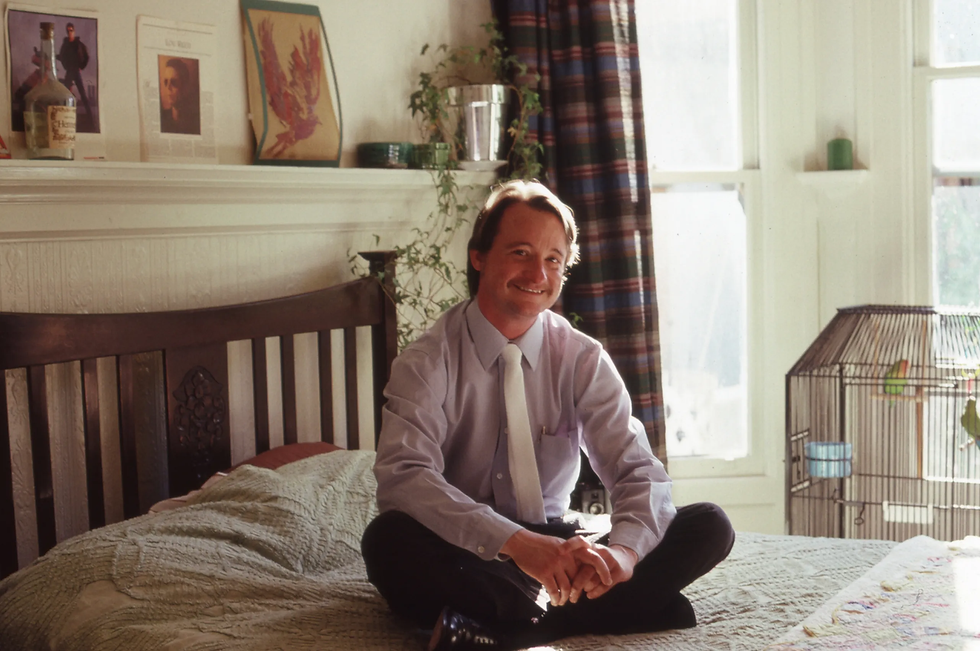
Scholarship in the field of trans* history is relatively new. Throughout the mid-late 20th century and into the 21st century, scholars were taking what had previously been established as Lesbian and Gay history and looking at it again with an explicitly trans* viewpoint. Trans* people had certainly been mentioned in other LGB scholarship before the mid-late 20th century, but almost always in the context of gay/lesbian inversion. Dr. Magnus Hirschfeld, one of the pioneers in the field of trans* history and healthcare in the early 20th century, though not trans* himself, assisted trans* Germans before his institute in Berlin was burned and destroyed by the Nazis. Other trans* people like Lou Sullivan in the mid-late 20th century approached trans* history from an insider perspective. Sullivan, a trailblazer for being the first trans man to identify as
homosexual publicly, wrote a biography on trans man Jack Bee Garland which gained him acclaim within the trans* community. Sullivan, though he briefly worked as a secretary at the University of Wisconsin-Milwaukee, was not a trained academic. The real first wave of academic trans* scholarship began in the 1990s with scholars such as Susan Stryker, Jamison Green, Kate Bornstein, and others. Most notable in this instance was the fact that the majority of these new scholars were trans* themselves. These historians and sociologists laid the groundwork for trans* and cisgender authors like Julia Serano and Gayle Salamon in the 2000s and up to the present day.
The impetus for creating a subfield of trans* history that was led by trans* academics seems obvious. Trans* authors such as Stryker and those who followed were able to reclaim the oftentimes transphobic narratives that had been pinned to them by cisgender doctors and historians for decades. Sometimes, narratives that came across as transphobic in retrospect may have come from ignorance, rather than disrespect. A founding work in the field of LGB history, Hidden From History (1989) by Martin Bauml Duberman, Martha Vicinus, and George Chauncey touches on many of the gender-expansive individuals covered in this paper, but in Hidden From History they are labelled as crossgender cisgender women. They could offer insider experience while also remaining professionally impartial to personal feelings and anecdotes that could potentially cloud an otherwise straightforward research paper/book. Of course, this has not stopped cisgender authors and academics from writing books and other articles about trans* topics. Furthermore, it is quite difficult to discern whether or not an author is trans* themselves just based on the content they write of. As far as I am aware, Emily Skidmore, author of True Sex: The Lives of Trans Men at the Turn of the Twentieth Century, a book instrumental to this research paper, is a cisgender woman. Does this make her qualified to write about the transmasculine experience? Sure, though to some it may come across as odd at first. In other instances, there are cases where over time the author ends up being part of the community. Aaron Devor, at the time of publishing his book FTM: Female-to-Male Transsexuals in Society (1997), had not yet started identifying as male or going by his current name; though at the time of writing the first edition of his book he makes an oddly prescient nod to his future as a man in the introduction, stating “No, I am not [transsexual] (although doing this work has certainly caused me to interrogate myself as to possible transsexual leanings).” The trans* identity of these authors remains an important factor, as the majority of the primary sources covered in this paper were written by cisgender outsiders. Rarely do we get insight from those closely tied to the situation or even from someone who has experienced similar challenges. The way cisgender or trans* authors cover a historical subject directly influences the way modern and future readers will interpret events of the past.

Trans* scholarship also began to diversify and specialize as the 20th century went on into the 21st. Rather than painting all trans* people with the same gender-neutral brush, authors began writing books about specific subsets of the trans* community. As a baseline became established in the early 21st century, there were those who were not only knowledgeable about the subject but also had life experience in it. Authors could focus on issues relating to class, race, religion, and so on. Books such as Black on Both Sides: A Racial History of Trans Identity by C. Riley Snorton is one such analysis on the intersection between gender transgression and racial politics in America. Books on specifically transmasculine history and topics began to receive widespread publishing attention, such as Skidmore’s True Sex…, Devor’s FTM…, etc. Transfeminine scholarship had a similar rise with works like Julia Serano’s 2007 Whipping Girl and A Short History of Trans Misogyny in 2024 from Jules Gill-Peterson. This specialization has allowed for advanced, in-depth studies to be conducted that address the individual needs of people previously underrepresented or mischaracterized.
As academia goes, a pro-X stance is going to eventually encounter a movement against it. Trans* and lesbian/women’s history academics have had a lengthy at-odds history with one another; with each oftentimes accusing the other of trying to rewrite history. In Susan Stryker’s Transgender History: The Roots of Today’s Revolution, she describes how even as early as the 1970s, cisgender feminist activists were “...critical of transgender practices such as cross-dressing, taking hormones to change the gendered appearance of the body, having genital or chest surgery, or living as a member of a gender other than one’s birth-assigned gender.” In particular to transmasculine people, many feminists saw transmasculine people as “...a female-bodied person passing as a man [sic] just trying to escape the poor pay (or no pay) of ‘women’s work’ or to move about more safely in a world that was hostile to women.” Many lesbian activists in particular saw the emergence of transmasculine scholarship as something that was ‘taking away’ from lesbian/women’s history and accomplishments. Conversely, FTM activists viewed this assertion as transphobic and as a disregard of very tangible evidence that did not cleanly fit with the former narrative. Though he’s not covered by the timeline set up in this paper, there was a notable controversy concerning the legacy of Dr. Alan L. Hart. Hart, who was assigned-female-at-birth but lived as a married man and accomplished doctor for the majority of his life. In the mid-late 1990s,

lesbian and gay activists posthumously deadnamed and misgendered Hart, organizing the “Lucille Hart Dinner” and claimed that Hart was ‘actually’ a woman but “made a choice to represent herself as a man based on the oppression of society…” This was met with considerable pushback. Transsexual activists such as Lou Sullivan, Margaret Deidre O’Hartigan, and Candice Helen Brown took deliberate action to rectify what they saw as historical transmasculine erasure by enlisting the assistance of the Portland “Lesbian Avengers” to protest the “Lucille Hart” Dinner. Through rocky dialogue and debate, today, by most published media like Scientific American, Hart is recognized as transgender – or at least adjacent.
The more visible trans* politics and history became, countries saw a rise in TERF (trans exclusionary radical feminist) ideology. Modern TERFism, spearheaded by notable public figures such as Harry Potter author J.K. Rowling – who, should be noted, has published multiple books under the masculine pseudonym Robert Galbraith – rely heavily on right-wing/conservative talking points as their way to prove the invalidity of the trans* perspective. Modern TERFism, especially in the UK, focuses heavily on demonizing the hypervisibility of trans women/transfeminine people but continues to perpetuate a hyperinvisibility of trans men/masculine people – all but erasing examples of transmasculinity from public life and the historical canon. In Judith Butler’s Who’s Afraid of Gender?, ironically, the chapter on TERFism in the United Kingdom focuses almost exclusively on its effects on transfeminine individuals. Terms relating to transmasculinity (trans man, transmasculine, etc.) can be found, collectively, a total of six times in the work. Terms relating to transfemininity (trans woman, transfeminine, etc.) can be found, collectively, a total of sixty-five times. This is not to imply that the book isn’t “woke enough” or that Butler needs to inflate the numbers on transmasculinity to reach some arbitrary quota, but it is another distinct example of the sort of hyperinvisibility that transmasculine authorship has faced in popular academia.
Stryker’s Transgender History, while not the first in the field of trans* history – published in 2008 – is considered by this author to be one of the most instrumental. Stryker, a trans woman herself, presents the subject matter in a neutral, unbiased way. It could be argued that by doing so, it becomes a positive stance, but it is the interpretation of the author here that the information in Transgender History is written and presented no differently than in other accredited historical books. Unfortunately for the purposes of this paper, the subject matter covered in Stryker’s book skews much too modern. With the advent of technology such as the camera, video, and audio recordings, the sharp increase in trans* documentation from the 20th century and onward is a given. She does reference earlier eras, such as 17th-century servant Thomas/Thomasine Hall,

who she places within intersex history, and also 19th century hunter Joseph Lobdell, who is examined in detail later in this paper. Certainly, a book that covers all of trans* history and related subject matter would easily be a 400+ page affair. What separates this book from others that do go back further in time is that it centers itself during an era where the trans* experience had started to actually become an identity. Transgender History is, in the words of Joanne Meyerowitz’s review of the book, “A lively introduction to transgender history and activism in the US.” It is a modern foundation for the study of trans* history. While not an explicitly argumentative source, Transgender History does make several salient points, the most notable of which is that trans* history is just as important of a topic as the history of any other minority group and that it deserves to be researched and taken seriously.
Jen Manion’s Female Husbands: A Trans History (2020) shows that the identity of husband functioned as its own class or status symbol—and that an person AFAB in the 17/18th century could pass successfully as male for decades without the use of HRT. Manion avoids loosely painting any of the people covered as explicitly trans*; their use of “trans” as a verb rather than a noun/adjective is central to the theme of the book – that these Female Husbands were able to create and maintain their masculine gender identity and presentation through repetitious gendered social actions. Manion also doesn’t outright label any of the people as certifiably men, instead opting to use gender neutral “they/them” pronouns. While this is understandable for ethical concerns, it also raises the question of whether or not this action potentially neuters any actualized masculine gender identities. The book focuses almost exclusively on white Female Husbands with part of one chapter in the American half that covers a spare few Black sailors – though, notably, they were not married, which is one of the core tenets to be considered a Female Husband by Manion. This distinction turns the category of Female Husband into a raced category as well. Black Englishmen and Americans are largely absent from this narrative. We are thus left with a hole in the record when it comes to crossdressing among different racial backgrounds. Furthermore, the records of the book are limited to a very specific timeframe and criteria. The text stays within England and the United States between the 1700s and early-mid 1800s, as the usage of the term died out by the mid-19th century. Female Husbands, as the name implies, had to have been legally married to women as well, so the book largely leaves out any reported FTM crossdressing person who might have been interested in men or were single.
Trans* history is a relatively new subject in academia and thus lacks the same wide variety of published scholarship that one may find in, for example, ancient Greek and Roman studies. Primary sources on individuals such as Murray H. Hall have a similar theme running through them – gender transgression marked as a kind of masquerade; the person in question was “lying” to their friends and family. Most of the news media that reported on Hall’s sex becoming public after his death ran with headlines such as “KNOWN AS A MAN FOR SIXTY YEARS, SHE DIED A WOMAN” and “MURRAY HALL FOOLED MANY SHREWD MEN.” The understanding that modern historians have regarding gender transgression and the trans* identity was not widespread. By today’s standards, many of these sources would be considered outright transphobic – though one could contest that in many instances the authors were not explicitly hostile as much as they were simply ignorant. Changing one’s gender/sex, as late as the 1950s with public figures like Christine Jorgensen, was still viewed as a sort of medical and social marvel. The intended audience for many of these newspaper articles is, by and large, the average literate citizen. Most of these articles do not attempt to argue that gender transgression is a positive or negative aspect. In more limited examples, authors had attempted certain kinds of early feminist analysis, like in an 1882 article from the St. Paul Daily Globe about an anonymous “woman” who was arrested for living and working in men’s clothing; the unknown author of the article stated as such:
"It is a striking commentary upon the relative status of men and women, that a woman can only secure the same pay which would be given a man for similar work, by concealing her identity in pantaloons… Is it any wonder so many young women deliberately sell their souls to the devil? It is about the only fair and square mar-ket which is offered them."
These newspapers and other primary sources differ from Stryker, Devor, and other secondary sources because they offer a historically relevant view on gender transgression and crossdressing without contemporary notions of gendered identity.
The historian’s perspective is paramount in their ability to analyze and formulate cogent arguments. The authors and sources mentioned in this section, as well as later in the text, each have their own unique frame of reference that alters how they’ve put their texts together. Trans* historians may have their own agendas, but the ones covered here are all qualified academics who have utilized the resources at their disposal to be able to present their findings in an equitable and thought-provoking manner.
Part One: 18th-century England
In my Junior year of undergrad, one of my History classes was taught by a professor who originally hailed from England. During one class, after reading a section of The Making of the English Working Class by E.P. Thompson, he asked the room of all American-born students how often we thought about (socioeconomic) class in relation to the historical topics we had been learning about so far that semester and in our personal lives. One student raised her hand and replied that she didn’t think about it too much; her view was from a decidedly more racial lens as a Black woman in America. Her answer made sense, and it caused a confident wave of nods from the mixed student body, myself included. My professor, of course not at all ignorant to the long history of race struggles in the United States, seemed somewhat fascinated that socioeconomic class had little bearing in regards to how we interpreted the world and interactions with each other. Most of us were self-aware of how we fit in the world in terms of race and ethnicity, but there was little diversity in the room in terms of economic status, thus leading to a kind of wealth-based homogeneity. My undergrad college being a small public college nestled in the middle of the woods likely served as the reason why. Answers might have been different if the question had been asked in a private, city-based university.
Still, the English perspective on everything from gender to manners came through the framework of socioeconomic class and status. My undergrad professor made it exceptionally clear that in Great Britain, class was everything. Class influenced how one talked, carried oneself, and, most importantly, how one dressed. Thus, the markers of what class one came from were carried with a person their entire life and most people could tell what class one belonged to within a few seconds. Many working-class residents of Great Britain found themselves hitting the “class ceiling” as they attempted to better their lives through monetary and social means. The ceiling, of course, was not a physical roof of a house but the invisible limit that the upper-class creates by segregating themselves and their activities from the working-class, typically by making the pursuit extremely pricey. The phrase “class ceiling” is especially relevant to the topic of gendered crossdressing, as it evokes the similar “glass ceiling” effect that many women and those assigned-female-at-birth “hit” as they attempt to gain more capital and social standing. This brings us to the phenomenon in 18th-century England known colloquially as the “Female Husband”. According to Jen Manion, the Female Husband (or FH) was an individual who was assigned-female-at-birth but assumed a legal, social, and economic role that was reserved for men – that of the husband.
The husband was able to engage in acts women of the 18th century were not permitted to do, such as working in specific laborious fields (or otherwise fields of work that were not permitted for women). The husband was not just a title bestowed after a legal union, but a class in itself. Husbands were biologically male, capable of impregnating their wives to continue their lineage, and, in most cases, were, in some cases, the primary financial earners in the household – though many worked and recorded finances in conjunction with their wives. The concept of a Female Husband threw a wrench into the concept of male superiority entirely. In an era where there was “...increased rhetoric among conservatives that female inferiority was ‘natural’”, a Female Husband proved through his/their composition of attire, financial success, and social standing that one did not have to be biologically male to achieve manhood – in particular, it was the outing of a Female Husband’s sex that allowed for this sort of public discourse to arise. When Female Husbands stayed in the closet or went “stealth”, there was no need for the general public to acknowledge and contemplate this difference.
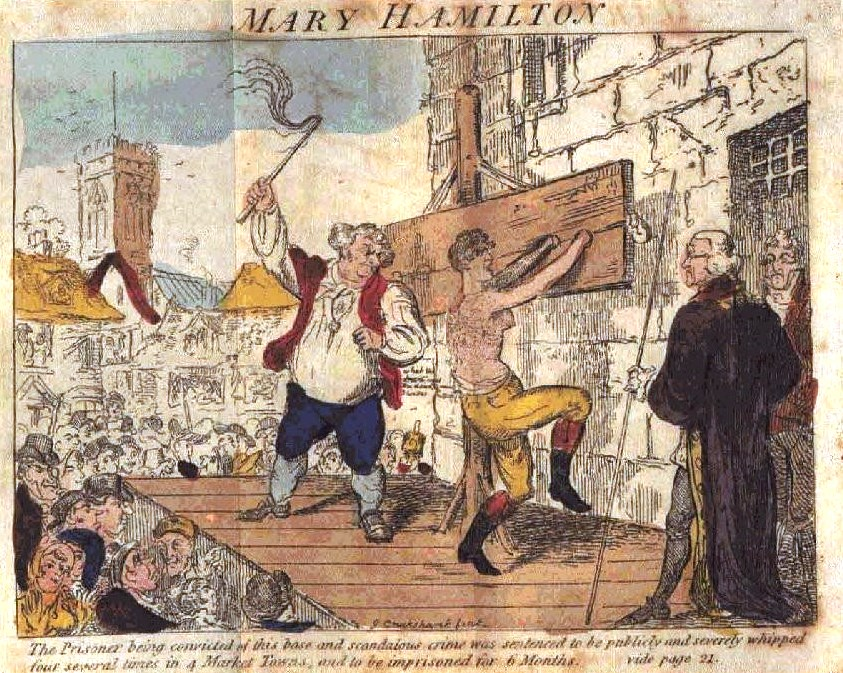
The first recorded Female Husband in the English newspapers was a man named Charles Hamilton. Hamilton, like other Female Husbands who came after him, was legally married to Mary Price – a cisgender woman, as far as we know. Hamilton, having lived as male since the age of fourteen, had his sex outed by 1746 when Price testified in court that Hamilton had “...entered her Body several times… but soon had reason to Judge that the said Hamilton was not a Man but a Woman.” In this case, it appears that Price was referring to Hamilton’s “woman-ness” not by his presentable gender, but by what lay beneath his clothing. His tale was written about extensively, such as in the “one part fact to ten parts fiction” recount of Hamilton’s life by English author Henry Fielding. Fielding’s portrayal of Hamilton as a sexually active serial polygamist supposedly came from Hamilton himself, but this contemporary primary account makes no attempt to gender Hamilton masculinely, instead opting to write in a sensational, tabloid style. When Hamilton’s sex was discovered, Fielding wrote that, “[T]he mother… tore open [Hamilton’s] Wastecoat, and rent [Hamilton’s] shirt, so that all her Breast was discovered which, tho’ beyond expression Beautiful in a Woman, were of so different a kind from the Bosom of a man, that the married women there set up a great titter.” Sex between two consenting, married adults was not what Hamilton was on trial for; if anything that was his expected duty as man and husband. What seemed to be of the greatest concern to the English papers was that Hamilton’s sexual prowess was, supposedly, so great that a woman could not distinguish it from a biological man. Though he was physically unable to provide Price with children, as was expected of him, his penetrative aptitude put him on par with cisgender men. His manliness was not tied up explicitly in his sex, but in his gender and mannerisms.
In Jason Cromwell’s description of “manly-hearted women”, the state of being “manly” does not, in fact, refer to male appearance or masculine behavior, but rather “aggressiveness and boldness,” which are “characteristics considered more appropriate to men”. This further asserts Butler’s idea of repeated performance of gendered actions (performance) leading to the creation of an internal gender identity and the external perception of one’s gender. Though these emotions were not considered naturally-occurring in those assigned-female-at-birth, Hamilton (and other Female Husband)’s consistent portrayal of these traits reaffirmed their manhood slowly over time, rather than in one big, loud show.
This, in turn, can be an explanation as to why Hamilton’s story circulated so quickly. Hamilton was a subject of fascination for many onlookers. Phallocentrism is the belief that the phallus is the central element in the construction of the social and academic world. From the (cisgender) male viewpoint, possession of the phallus was the ideal. It was the center of a (cisgender) man’s meaning and “became man’s identity with himself… [the] masculine symbolic.” Hamilton’s tale would have likely created anxiety among cisgender men who may have felt as if Hamilton was performing maleness better than they were. What if their girlfriends and wives found out that a “woman” was capable of pleasing them just as much, or more? This notion would shatter the phallocentric ideal that manhood was inherently superior to womanhood. It is not unlike Sigmund Freud’s theory of castration anxiety. While Freud used it to reference a man’s physical fear of having his genitals cut off in retaliation to incestuous relations, it can just as easily refer to a feeling of being insignificant, or to keep oneself from feeling dominated by another person. If there was no curiosity or fear at all about a person who can change their societal gender, then the story would not have been written about, let alone have garnered such widespread publications.
Furthermore, Hamilton was of the working-class. He could not politely buy his way out of punishment like other genteel Englishmen. This meant that it was easier for English courts to charge him under “...something as mundane and ubiquitous as the Vagrancy Act… [which was] focused principally on employment – or lack thereof…”. While he was certainly talented in bed, Hamilton was unable to fulfil one of the core tenets of English manhood – making sufficient money.
Employment and money were both significant in the 18thth c. arrest and trial of James How(e). Like Hamilton, Howe was able to build a life for himself as husband to a wife, Mary Howe, but unlike Hamilton, Howe was relatively well off. The owners of the White Horse Tavern in London’s East End, the Howes managed to save money and buy more properties, as well as win the respect of their local communities. Howe’s performance as a man is especially notable because he was able to achieve the standard of higher-than-working-class- but-not-quite-middle-class manhood that would allow a man and his wife to live comfortably. Howe was eventually outed by a Mrs. Bentley who blackmailed him over his gender secret and the story of a “woman” posing as a successful tavern owner flew through English headlines. Even with his relative wealth, Howe was not safe in his gender. He had earned a considerable amount of social capital through his investments back into the community, but even this was not enough. Despite multiple decades of repeated masculine performance, his masculine privileges were stripped from him and Howe lived for the rest of his life as a woman, Mary East – a saddening trend that every subsequent Female Husband followed.
Though we don’t know for certain if Howe personally identified as a man, there is a unique aspect to his/their story that makes his/their degendering so distinctly cruel. The Chronicle, a contemporary newspaper, described Howe’s willingness to dress in male attire not as a conscious act, but as the hand of fate. They wrote that Howe and an unnamed female friend, apparently, decided that one of them should act as a man, so they tossed a halfpenny to decide the outcome and the coin landed on Howe assuming the male role. This interpretation of past events conveniently frames the entire situation in a non-threatening, heteronormative and cisnormative manner. In this interpretation, Howe wasn’t actually a man; he was, in the eyes of The Chronicle, a woman playing dress-up. Cisgender men of the time could now rest easy knowing that they hadn’t been emasculated by a “real” man – the coin toss that decided James’ fate was merely that: fate. Leaving his gender down to what appeared to be random chance removed the conscious decision to live his life in the masculine way he did.
The former point about Female Husbands coming from mostly working class backgrounds is similar to other aspects of queer/LGBT+ history. The whole reason modern historians have records of Female Husbands was because they were outed and/or arrested. Unlike the middle and upper class, working-class people had little access to privacy. Working-class citizens could not bribe or use connections to wiggle their way out of the law. George Chauncey notes as such in his book Gay New York: Gender, Urban Culture, and the Making of the Gay Male World. Though Chauncey’s book analyzes an era chronologically after the one covered in this paper, there is a similar connection between how working-class cisgender gay men and Female Husbands were forced to have their privacy in public. Chauncey says that the working-class gay use of the streets – typically in this instance for casual sex – “challenged bourgeois conceptions of public order”. Wealthier gay men who could afford to seek their flings on “the ‘gay side’ of the Astor Hotel bar” and in other private or semi-private locations away from the prying eyes of law enforcement had security. Their arrests were not recorded as much, which can give the assumption that there were fewer middle/upper-class gay men.

But it’s unreasonable to assume that. Hence the connection to the Female Husband; This is not always the case, of course. The Howes were known to have a cautious and discreet lifestyle before being outed, per Bram Stoker, and yet that still did not prevent James Howe from being outed to the public. There were likely many more female-to-male individuals who simply were not outed and/or arrested due to social or class-related reasons. But the safety they enjoyed in their time means they’ve ceased to exist in ours.
Many Female Husbands were unfortunate enough to have their title as male husband stripped from them after being outed. In fact, “no one who was found out to be assigned female and living as a man in these eighteenth- and nineteenth-century accounts was allowed to continue doing so”. However, some in the 19th century were more fortunate. In 1807, shipwright James Allen legally wed Abigail Naylor. The two were married for twenty-one years in London before Allen met his untimely death from head trauma in a work-related accident. Up until his autopsy, Allen’s gender had been entirely secure as male. This was unique, as even before being outed, there was generally some suspicion among Female Husbands’ colleagues that the individual was not “fully” male. In Allen’s case, his legal status as a husband to a woman was one of the primary reasons he was able to ‘keep’ his gender post-mortem. Lawyer Thomas Shelton, the city coroner who presided over Allen’s body, even explicitly declared that “I considered it impossible for [Allen] to be a woman, as he had a wife.” Though he was working-class, as far as we can tell, like other Female Husbands of his era, his social gender – and most notably, the legal document stating his identity as husband – was more important to Shelton than the physical body that lay in front of him.
James Allen was not subject to the standard practice of degendering that other Female Husbands were, at least not to the same extent. As mentioned, the coroner who presided over Allen’s body refused to degender him on the basis that Allen was legally a man wedded to a woman. But it also wasn’t just the legal paperwork. Before he was posthumously outed, Allen performed masculinity impeccably. Unlike Charles Hamilton, he was a successful laborer and made enough money to live comfortably with his wife. Furthermore, his use of both binding his chest and wearing men’s clothing contributed to his coworkers and colleagues’ disbelief in Allen’s sex. Allen’s appearance was also reportedly quite masculine. Like James Howe,

Allen went through a kind of physical transformation. Despite there being no hormone replacement therapy available to him as it is to modern-day trans men, Allen still had “masculine hands”, but his social characteristics were what carried him. He was reported as being “a sober, steady, strong, and active man… a smart and handsome young man, and an excellent groom.” Though “groom” was a way to refer to a young man around that time, the specific use of it in “bridegroom” was the key influence. As Allen had capably and convincingly performed his role as a bridegroom, Shelton the coroner had no reason to now state him as anything else, despite the protestations of his students, who wished to state Allen as a woman based on their findings of his biology.
Allen’s convincing masculinity is what saved him, so to speak, from being forcibly gendered as female. All of the aforementioned English Female Husbands were, as far as modern scholars can tell, good citizens. They worked hard to earn the respect of their colleagues and countrymen and they were good to their wives. They flew under the radar until a particular event catapulted them into the public spotlight. They sought to live, as Emily Skidmore puts it, “normative lives.” By fitting in and not raising attention to themselves, Female Husbands and other female-to-male individuals lived unexceptionally. They were not often subject to “metronormativity”, the concept that queer life was primarily centered around large urban cities. There were few instances where this was the opposite.
Dr. James Barry was never considered a Female Husband – primarily because he remained unwed his whole life – but is among others like James Allen who were outed after their death. Barry, born in 1789 in Ireland, was a military surgeon in the British Army; his crowning achievement was performing the first recorded caesarean section (C-Section) by a European in

Africa where both the mother and child survived the surgery. His life was far from secluded. He travelled frequently, including to Cape Town, South Africa, where he and the Governor Lord Charles were accused of “buggery,” a crime that was almost exclusively pinned against homosexual men. As his sex had not been outed just yet, this accusation, serious as it was, affirmed his gender as a man. After Dr. Barry died in his 70s, his body was exhumed against his explicit wishes but records of the people who knew him, at least the ones whose accounts survived, did not misgender him to the same extent as many other FTM crossdressers. In an 1865 letter to the Medical Times and Gazette, Dr. J.C. Cookworthy, a colleague of Barry’s, wrote that, “[Barry] was of small stature, yet proportionate, juvenile, and apparently of delicate constitution, but he in no respect wore the aspect of a girl or woman.” His personality was more extensively written about than the Female Husbands as well; Barry was “prompt to resent an offense,” and at university he had spoken out against a rude peer that required said peer to “either apologize or fight.” At the time of his death, he was still living as a man and referring to himself with masculine pronouns. Though he has come under a great deal of speculation by modern historians who had attempted to “feminize” him and rewrite him in history as a woman, his masculine gender was affirmed in the end once he was buried under the name and persona he spent decades cultivating for himself.
In 18th-century Great Britain, stories of female-to-male gender crossing were one of the many tales that were published during this time. Female Husbands and other gender crossers were able to lead successful, hard-working lives for many decades, with many contributing generously to the communities in which they lived. Unfortunately, the vast majority of the surviving records we have of them come about from their forced outing, whether alive or posthumously. The majority of the people mentioned in this chapter had the female gender applied to them, in the words of Jen Manion, as a punishment. Their gender presentation became distinctly separate from their assigned-sex-at-birth, and they were each able to affirm their gender over the course of years through repeated performances by following the dominant expectations of men at the time.
Part Two: 19th-century America
Across the Atlantic, notions regarding gender and privilege were beginning to change as America entered the 19th century. As mentioned previously, much of the social structure of 18th century England was shaped by the class in which a person resided. Class was seen as immutable, even if, theoretically, a previously poor person was able to gain wealth. In that framework, they still would not have the correct social “breeding” that separated the working poor and the upper class. The United States, however, had swung firmly by now into the Industrial Revolution. By the late Victorian era, factory-produced mass market clothing was available to even the common worker. With easier access to cheaper, high-quality clothing, some demarcations between classes began to disappear. It was no longer immediately obvious who belonged to what walk of life, as it had been in the past. People were beginning to “pass” as something they had not been born as – and this blurring of boundaries upset the dominant ruling class.
The 19th century also saw the rise of the women’s suffrage movement. Like the aforementioned Female Husbands, women’s rights activists were directly going against the grain of established society, which ironically contrasted how many Female Husbands opted to go “stealth” and fit within heteronormative boundaries. By the 1850s, the movement had taken off in the United States. Many of the values expressed by suffragists were similar to the sentiments expressed by FTM crossdressers who had been outed against their will, such as Milton (discussed later) stating he had only put on men’s clothing for financial reasons. They argued against women’s lack of autonomy, low wages, the inability to hold public office and vote, a lack of public safety, and so on. In other testimonies from Female Husbands and FTM crossdressers, low wages were an oft-mentioned explanation as to why a FH would want to dress and live as a man for such an extended period of time. In return, women’s rights activists were ridiculed by men – and even by some of their fellow women. Suffragettes had their gender questioned as a result of their beliefs; called “manly” because of it, or at the very least not “womanly”. It is interesting, then, that even this deviation from the norm resulted in a form of degendering. Their “mannish” political views served to “unsex” the activists in the eyes of the public, especially when many of them chose to wear bloomers (a type of trouser) in public. Yet, these accounts differ from the stories of some people who transed their gender and clothing. There were, to be fair, accounts of cisgender women who were arrested for wearing pants, such as Emma Snodgrass in Boston in 1852 for “donning the breeches,” but they did not face the same scrutiny, humiliation, and punishment that Female Husbands or other female-to-male individuals received. Some Female Husbands faced strong punishment – the aforementioned Charles Hamilton, upon his conviction and arrest under the Vagrancy Act, was subjected in 1746 to public whipping in four towns and six months imprisonment with hard labor. A return to presenting as the female gender was not the suffragist’s punishment because they hadn’t truly transgressed that gender line.
English and American interpretations of gender were further separated by the influence of race and colorism on how a person was supposed to present themselves. Up through the 19th century, all of the Female Husbands mentioned in newspapers and legal papers were white, or otherwise of European descent. From 1800 to the end of the American Civil War, the population of Black Americans had quadrupled from approximately 1,002,037 to 4,441,830. Comparatively, present-day England’s population of Black people barely scrapes 2.4 million, though England’s small size complicates comparison. In America following the Civil War, freed Black Americans used clothing and external presentation as a method of expressing freedoms that were previously held from them by white slave masters who treated them like less-than-human. Black Americans who transgressed gender norms shared this desire for freedom with their white counterparts, and both were extremely vulnerable to the law.
Maritime labor in particular provided a welcome place of employment for Black Americans seeking to better their lives. The escape of the ocean kept them away from vile slavery practices on land and came with plenty of monetary benefits if one was able to brave the harsh waves, dank living conditions, and long hours – though it is noted that marine life did not come without its own risks; Black Americans were vulnerable to (re)enslavement without the legal protections one would have on land. With sailors largely being hired from multiple places, there was the opportunity for those who had escaped their old lives to begin anew with fresh identities. The accounts of African-American FTM sailors are considerably few compared to white Female Husbands, even the ones who did work as dockhands, but this isn’t to say their stories were insignificant. Charles Williams was one of the few African-American FTM sailors historians have a record of. In 1834, Williams, who was assigned-female-at-birth, was convicted of stealing two hogs and was sentenced to four months in jail at Blackwell’s Island (now called Roosevelt Island) in New York City. Newspapers that covered William’s arrest made sure to specify his race, using terms such as “colored”; one paper went so far as to begin their article with “A black, named Charles Williams…” The mention of Williams’ race is significant in relation to this act. Gender transgression was already met with a certain level of suspicion, but Williams being perceived as a Black man made him untrustworthy in the eyes of the law. It is important to recognize that the early modern instances of female-to-male gender crossing was not done by just one group of people. Though most were working-class, Black gender crossers were simply not able to live up to the narrative standards that stories of white crossdressing sailors had in contemporary media.
What also separated sailors like Charles Williams from the Female Husbands of the 18th century was that he was, as far as historians can tell, not a husband. Though he and other African-American sailors of the time were sometimes given backhanded compliments – the Morning Post referred to female-to-male sailor William Brown as “...handsome for a Black.” – there was little talk of their sexuality or sexual prowess as there had been with white English Female Husbands like Charles Hamilton. This change is historically significant and relates back to the changing political sphere in America. As the United States progressed economically, financial gain and prosperity became a much more wide-spread reasoning as to why a person AFAB would live as a man, rather than a sexual inversion. Few words were given to their personal sex or marriage escapades; to do so would be giving the individual agency. Furthermore, was no longer a requirement for men to have a wife to be convincingly thought of as a man, as many single men were able to engage in industrialized solo commerce. For African-Americans in particular, harder access to formalized marriage and its legal benefits meant that if they were good workers and made a decent salary, that could be a good enough method of “passing” on its own.
In fact, wealth was such a convincing method of transition that, if appearances were kept up, a person could convincingly live an extended life as their preferred gender without casting a doubt on their colleagues. Murray H. Hall is probably one of the best-known examples of this. Born in 1841 in Govan, Scotland but immigrating to New York City in 1870 at the age of twenty-nine, Hall lived for decades as a man. He wasn’t one to shy away from public life either; not only was he a bondsman for the infamous Tammany Hall establishment, he also reportedly ran a commercial “intelligence office” out of his apartment, aided sometimes by his second wife. By all accounts, Hall was well-off. He could vote, he had his own apartment in Greenwich Village near the Jefferson Market Courthouse, and frequently bought books from a local bookseller,
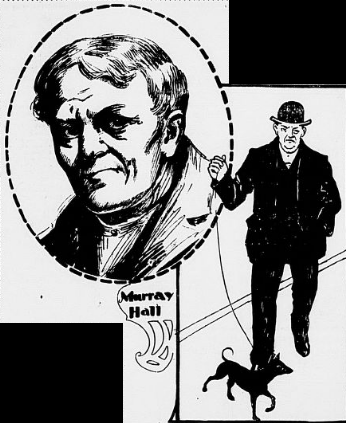
who described Hall as “...well read… [and] a modest little man, but occasionally he showed an irascible temper… when I met him on the street he was either accompanied by his black and tan dog or some woman or women, strangers to me, who I suppose were clients.” Hall’s temper was noted in his ability to live as a man. Though he may have been naturally hot-headed, any outward expression of bold anger would not have been considered “ladylike,” further cementing him as male in the minds of others.
Hall eventually passed away from untreated breast cancer at the age of fifty-eight. Before his death, he was married twice and adopted a daughter with his second wife. Hall was, notably, never referred to as a “Female Husband”, despite his legal marriage to a woman and newspapers in New York and beyond using ‘she/her’ and other feminine terms to describe him. The term itself had largely fallen out of interest with publishers in the 19th century as stricter laws on gender and crossdressing were enacted. Female Husbands and other people who transed their genders no longer had the same tabloid-style appeal as they had in the past. Women’s liberation was becoming too real, so to speak, for many, and thus they felt threatened like never before of women following in the Female Husbands’ path.
Hall’s job at Tammany Hall for over twenty-five years led him to “[shake] every hand in the 13th Senatorial District”, so by the time of his death he was already well-known by his constituents. He was further described as “man about town, a bon vivant, and all-around ‘good fellow’” and was a frequent attendee of the male-only Iroquois Club. Unfortunately, newspapers like the New York Times claimed that Hall “fooled” everyone with his outwardly male presentation or that he was “masquerading” as a man. In less than a few days, this forced outing had pushed Hall from his place as a respected, if somewhat reclusive, politician to humiliation. Like the Female Husbands and other FTM gender-crossers before him, he was no longer able to hold onto the gender that he had established for himself once it became public knowledge. State Senator John Raines quipped, “You Tammany fellows are such a clever lot… I don’t wonder you pull such an overwhelming vote down there, when you can dress up the women to vote.” – which played directly into the idea that Hall and other FTM crossdressers were only living as men to “fool” everyone and that crossdressing inherently had some kind of criminal element to it. The Evening World broke headlines such as “KNOWN AS A MAN FOR SIXTY YEARS, SHE DIED A WOMAN”, as well the New-York Daily Tribune subtitling their article on Hall, “She’s Dead, the Poor Fellow!” after a comment made by another politician. Even through his carefully calculated decades passing convincingly as male, Hall was now a woman to the journalists covering his death.
So then, why did so many of Hall’s colleagues take a different stance? After the news of Hall’s sex became public, many of Hall’s previous Tammany Hall peers and co-workers did not treat him with the same level of surprise and gossip many of the newspapers had done. They continued to admire his competency and ability to pass as male. Of Hall’s former Tammany Hall colleagues who were interviewed by various outlets, not one misgendered him. Instead, they said that he “...dressed like a man and talked like a very sensible one. The only thing I ever thought eccentric about him was his clothing,” and “A woman? Why, he’d line up to the bar and take his whisky like any veteran, and didn’t make faces over it, either. If he was a woman he ought to have been born a man, for he lived and looked like one.” That last line strikes a particular chord. It affirms that, in the eyes of those who knew him, Hall’s outward gender as a man and all of the repeated social interactions he had superseded his sex. To put it in modern terms, he was one of the boys. Hall had performed masculinity through a complex ritual of tobacco chewing, whiskey drinking, brawling, and other activities that were (and still are) considered extremely masculine. If his sex hadn’t been revealed, modern historians may not have ever heard about him outside of being a footnote in Tammany Hall’s history.
Like in Hall’s case, monetary success was frequently described as one of the main factors to explain why a person assigned-female-at-birth would “choose” to live as a man. Many of the people questioned in this manner claimed that, like in the case of Joseph Lobdell, they only lived as men to make more money. Lobdell, a hunter and sharpshooter from New York, was cited as stating, “I made up my mind to dress in men’s attire to seek labor, as I was used to men’s work and only got a dollar per week, and I was capable of doing men’s work and getting men’s wages.” As a matter of historical record, we’re unable to determine whether or not Lobdell was being facetious or not when they said this. Another FTM gendercrosser by the name Milton B. Matson was arrested in 1895 for passing fraudulent checks.

When interviewed by the police, he claimed that “I have no reason whatever for wearing this garb except monetary matters.” This would be believable if in 1903 Milton didn’t also appear in a Californian court to take the stand and insist that the courts recognize his personal identity as a man.
This detail is not significant for some scholars, however. A classic compilation of gay and lesbian historical materials, Hidden from History, where Matson, Hall, Lobdell, and other figures mentioned in this paper are written about, the central theme of the essay barely acknowledges a transmasculine reading of the historical figures in question. They present them as cisgender women who coped with misogynistic standards of their time by dressing as men. The editors do not see an instance in which these people may have actually identified with the male gender outside of their economic pursuits; so they continually refer to these individuals as women, along with the use of ‘she/her’ pronouns. The essay is written as if all of these people’s repeated portrayals of masculinity were simply a convenient facade. There is a significant level of hostility that older lesbian and feminist scholarship has towards trans readings of LGB+ history. For many of these academics, to say that Hall, Matson, etc, aren’t straightforward cisgender women and that they may have expressed trans-adjacent feelings would be “taking away” from women’s/lesbian history. Though I have been critical of Jen Manion’s insistence on the use of ‘they/them’ pronouns to describe the Female Husbands, as I believe doing so potentially neuters their personal identities as men, it is a much more acceptable alternative to outright claiming strict femininity.
As the author of this essay can personally attest, it is not so easy as just wearing masculine clothing to pass as a man. The traits typically associated with manhood have to first be learned – which is not simple, as there is no singular guidebook, only through observing others can this be done – and then repeated multiple times in a covert manner so as to not arouse suspicion. This repeated performance is what solidifies a person’s image in the eyes and mind of others. We see it clearly with people like Murray Hall, who lived for multiple decades as a man. He was able to craft brash, hot-headed tobacco-chewing, flirty, drunk performances that may have eventually become natural to him over the years. It is this author’s opinion that the reason why someone like Hall lived as a man is less important than that he actually did so. As Manion expresses as well, simply chalking the reasoning up to “economic, social, or political power… is too simple.” The experiences seen in these cases can be directly analogous to the lived experiences of modern transgender and transsexual men. Trans men already face a strikingly high rate of invisibility across fictional media, the news, and in historical records, though it would be unethical to absolutely confirm any of these people as definitively one identity or the other, especially as they did not have the language to define one’s gender as we do now, to at least address them in this framework proposes that the human experience is rich and diverse. It would be crueler still for historians to deny a person their lived experiences in favor of strictly adhering to a biological aspect totally out of one’s control – though of course we have no records of any of these individuals’ sex. These experiences offer contemporary readers alternate, trans-friendly readings of such historical figures, which may help to alleviate the divide by offering proof that trans men and transmasculine identities are not a “new trend.”
Conclusion:
Throughout the research of this paper, there was a singular question I continually posed to myself – is it ‘right’ to consider these historical figures analogous to modern day transgender/transsexual men? Afterall, the language was not there for them to describe themselves in this way. All of the individuals covered in this paper lived prior to the invention of such descriptors – trans man, transmasculine, FTM, demiboy, drag king, etc., so it’s not so easy to just peg them into specific, mostly arbitrary categories. As a result of this, terms like “Female Husband” were invented for them on their behalf by new sources and other channels of legal power. “Female Husband(s)”, a popular term during the mid to late 18th century and very early 19th century to describe a person assigned-female-at-birth but living and dressing as a man, became commonplace language for a time. Then, in the early 20th century, “Female Husband” fell out of favor. Until the invention of specific terminology like “transvestite” in the 1930s, terms like “invert” were used loosely in its place. This is not to say that these newer terms were necessarily more applicable or “correct” to describe these people, but many people choose to do as they try to find examples of people like them existing throughout history. This gap in terminology pairs well with the theory of transmasculine invisibility and may serve, partially, as reasoning for why it is so difficult to trace transmasculine history throughout archives, libraries, and other academic sources. In the cases of people like Murray Hall who had relatively prominent lives (and subsequently prominent posthumous outings), there are specific phrases a historian can look out for – “woman living as man”, “he-she”, “masquerading as a man”, and so on – that can build a reliable paper trail.
Between those terms you have the rich history of people, some of whom had legal action taken against them post-outing, who transgressed expectations on what a ‘woman’ was allowed to do, say, and feel within polite society. Many were successful in achieving a standard of masculinity that was accepted by their peers, whether that was in respect to their finances, prowess in bed, or their success within their professional fields. These people were able to live as men, successfully, for decades with the combined effort of wearing men’s clothing and also incorporating the social trends and characteristics that were considered acceptable for men at their time. For Female Husbands like Charles Hamilton, his on-the-record ability to please and penetrate his cisgender wife so effectively that she could not tell he wasn’t a “real” man helped to propel his story among the wider cisgender audience. There was worry that his actions may influence other women to follow in his footsteps, or that women may seek out a Female Husband like Hamilton instead of a traditional cisgender man. Likewise, 19th century gender-crossers such as American politician Murray H. Hall built a reputation for himself as a tough, whisky-drinking, brawling man’s man with a very private personal life. After his death and subsequent outing, the approach the news media took was similar to the way English news media had portrayed Female Husbands. They took Hall’s lived experiences as a man as a “masquerade”, as if he had lived for decades as a man simply for fun or to fool people.
This circles back to the initial question – do clothes make[th] the man? Or is it something else entirely? Is it a combination of clothing and socialized mannerisms? We have seen that through a mix of both parts, plus perhaps a little luck, the people covered in this paper that even without the medical marvel of hormone replacement therapy, someone assigned-female-at-birth can indeed achieve a level of assimilation into the masculine social sphere and live comfortably there by continuing to engage in the same performances that cisgender men engage in their lives. Whether or not the people covered in this paper internally identified as male is something that we in the present cannot solve. In a way, it is almost irrelevant. The individuals covered in researching this topic showed that despite lacking the physical genitals and secondary sex characteristics to deem them male, they were still able to establish secure male social lives until an unseen, external force involuntarily compelled them out of the closet.
Bibliography
“About Robert Galbraith (Aka J.K. Rowling).” Robert Galbraith, June 12, 2025. https://robert-galbraith.com/about-the-author/.
“‘A Woman Was Arrested.’” St. Paul Daily Globe, February 20, 1882. https://transguyarchive.wixstudio.com/transguyarchive/post/a-woman-was-arrested.
Blackwood, Evelyn. “Gender Transgression in Colonial and Postcolonial Indonesia.” The Journal of Asian Studies 64, no. 4 (November 2005): 849–79. https://doi.org/10.1017/s0021911805002251.
Bullough, Vern L. “Transvestites in the Middle Ages.” American Journal of Sociology 79, no. 6 (May 1974): 1381–94. https://doi.org/10.1086/225706.
Butler, Judith. “Performative Acts and Gender Constitution: An Essay in Phenomenology and Feminist Theory.” Theatre Journal 40, no. 4 (December 1988): 519. https://doi.org/10.2307/3207893.
Butler, Judith. Who’s Afraid of Gender? Farrar, Straus and Giroux, 2024.
Cauldwell, David. “PSYCHOPATHIA TRANSEXUALIS.” Sexology 16 (1949): 247–80. http://www.wpath.org/journal/www.iiav.nl/ezines/web/IJT/97-03/numbers/symposion/cauldwell_02.htm.
Chauncey, George. Gay New York: Gender, Urban Culture, and the Making of the Gay Male World, 1890–1940. New York, NY: Basic Books, 1994.
Clawson, Laura. “Social Mobility and the ‘Class Ceiling’ in the UK.” JSTOR Daily, May 25, 2025. https://daily.jstor.org/social-mobility-and-the-class-ceiling-in-the-uk/.
“‘Clothes Make The Man’ Saying Origin & Meaning.” No Sweat Shakespeare, May 20, 2025. https://nosweatshakespeare.com/quotes/famous/clothes-make-the-man/.
Cookworthy, J.C. “THE REPUTED FEMALE ARMY SURGEON.” The Medical Times and Gazette, 1852. https://archive.org/details/medicaltimesand13unkngoog.
Cromwell, Jason. Transmen & FTMs: Identities, Bodies, Genders & Sexualities. Urbana: University of Illinois Press, 1999.
Devor, Aaron. FTM: Female-to-Male Transsexuals in Society. 2nd ed. Bloomington: Indiana University Press, 2016.
Dowling, Aydian. “Opinion: The Invisible Man: Why Have Transmen Been Left Behind?” NBCNews.com, October 8, 2016. https://www.nbcnews.com/feature/nbc-out/opinion-invisible-man-why-have-transmen-been-left-behind-n662416.
Drover, Mallory. “Fashion Crimes: The Rabbit Hole of Criminalized Cross-Dressing in US History: Mallory Drover ’19 at Boston MFA in Boston, MA.” Antioch Engaged, March 26, 2017. https://co-op.antiochcollege.edu/fashion-crimes-the-rabbit-hole-of-criminalized-cross-dressing-in-us-history/.
Duberman, Martin B., Martha Vicinus, and George Chauncey. Hidden from History: Reclaiming the Gay and Lesbian Past. The Internet Archive. London, England: Penguin Books, 1990. https://archive.org/details/hiddenfromhistor0000unse_p9v8.
Du Preez, Hercules “Dr James Barry: The Early Years Revealed.” SAMJ: South African Medical Journal 98, no. 1 (2008): 52–58. https://www.scielo.org.za/scielo.php?script=sci_abstract&pid=S0256-95742008000100025&lng=en&nrm=iso&tlng=en.
Erasmus, Desiderius. Collected Works of Erasmus Adages: Ii 1 to Iv 100. Edited by Margaret Phillips and R.A.B. Mynors. Vol. 31. Toronto: University of Toronto Press, 1982.
Ermarth, Elizabeth Deeds. Sequel to History: Postmodernism and the Crisis of Representational Time. Princeton, New Jersey: Princeton University Press, 1991.
Fielding, Henry. “The Female Husband: Or, the Surprising History of Mrs. Mary, Alias Mr. Charles Hamilton, Who Was Convicted of Having Married a Young Woman of Wells and Lived with Her as Her Husband (1746).” The Internet Archive, 1746. https://archive.org/details/bim_eighteenth-century_the-female-husband-or-_fielding-henry_1746
“Female Sailor.” Morning Post. September 2, 1815. https://www.britishnewspaperarchive.co.uk/viewer/BL/0000174/18150902/002/0004#.
Freud, Sigmund, and Wilhelm Fließ. The origins of psycho-analysis; letters to Wilhelm Fliess, drafts and notes, 1887-1902. The Internet Archive. New York: Basic Books, 1954. https://archive.org/details/originsofpsychoa00freu.
Garlick, Sarah. “Ethnic Group, England and Wales: Census 2021.” Office for National Statistics, November 29, 2022. https://www.ons.gov.uk/peoplepopulationandcommunity/culturalidentity/ethnicity/bulletins/ethnicgroupenglandandwales/census2021.
Gibson, Campbell, and Kay Jung. “HISTORICAL CENSUS STATISTICS ON POPULATION TOTALS BY RACE, 1790 TO 1990, AND BY HISPANIC ORIGIN, 1970 TO 1990, FOR THE UNITED STATES, REGIONS, DIVISIONS, AND STATES.” United States Census Bureau, September 2002. https://www.census.gov/content/dam/Census/library/working-papers/2002/demo/POP-twps0056.pdf.
G., Aidrian. “Murray H. Hall.” Trans Guy Archive, December 8, 2025. https://transguyarchive.wixstudio.com/transguyarchive/post/murray-h-hall.
Jackson, Sarah. “Mary East (Aka James How) and Mrs How of the White Horse, Poplar.” East End Women’s Museum, June 23, 2017. https://eastendwomensmuseum.org/blog/2017/6/23/mary-east-aka-james-how-and-mrs-how-of-the-white-horse-poplar.
“Jason Cromwell | Independent Researcher | Research Profile.” ResearchGate. Accessed February 4, 2026. https://www.researchgate.net/profile/Jason-Cromwell.
Jones, Amelia. “‘Clothes Make the Man’: The Male Artist as a Performative Function.” Oxford Art Journal 18, no. 2 (January 1, 1995): 18–32. https://doi.org/10.1093/oxartj/18.2.18.
Kahler, Abbott. “The Mystery of Murray Hall.” Smithsonian Magazine, July 21, 2011. https://www.smithsonianmag.com/history/the-mystery-of-murray-hall-35612997/.
“‘KNOWN AS A MAN FOR SIXTY YEARS, SHE DIED A WOMAN.’” The Evening World. January 18, 1901. https://lccn.loc.gov/sn83030193.
Loudon, Irvine. “Scanty Particulars: The Strange Life and Astonishing Secret of Victorian Adventurer and Pioneer Surgeon James Barry.” BMJ: British Medical Journal 324, no. 7349 (June 1, 2002). https://doi.org/10.1136/bmj.324.7349.1341.
Lucas, R. Valerie. “‘Hic Mulier’: The Female Transvestite in Early Modern England.” Sexuality in the Renaissance / La Sexualité à la Renaissance 12, no. 1 (Winter 1988): 65–84. https://www.jstor.org/stable/43445585.
Manion, Jen. Female Husbands: A Trans History. Cambridge, United Kingdom: Cambridge University Press, 2020.
Marcus, Eric. “Magnus Hirschfeld.” Episode. Making Gay History 4, no. 2, October 25, 2018. https://makinggayhistory.org/podcast/magnus-hirschfeld/.
Meyerowitz, Joanne. “Transforming Sex: Christine Jorgensen in the Postwar U.S.” OAH Magazine of History 20, no. 2 (March 1, 2006): 16–20. https://doi.org/10.1093/maghis/20.2.16.
“‘Miss Emma Snodgrass.’” The New York Times, November 30, 1852. https://nyti.ms/4s7k5nY.
“‘MURRAY HALL FOOLED MANY SHREWD MEN.’” The New York Times, January 19, 1901. https://nyti.ms/3MMimWc.
“Mystery of Murray Hall.” The New-York Tribune, January 19, 1901. https://www.loc.gov/item/sn83030214/1901-01-19/ed-1/.
Pain, Stephanie. “Histories: The ‘Male’ Military Surgeon Who Wasn’t.” New Scientist, March 5, 2008. https://www.newscientist.com/article/mg19726462-000-histories-the-male-military-surgeon-who-wasnt/.
Rose, Gillian. “Distance, Surface, Elsewhere: A Feminist Critique of the Space of Phallocentric Self/Knowledge.” Environment and Planning D: Society and Space 13, no. 6 (December 1995): 761–81. https://doi.org/10.1068/d130761.
Sarnoff, Irving, and Seth M. Corwin. “Castration Anxiety and the Fear of Death.” Journal of Personality 27, no. 3 (September 1959): 374–85. https://doi.org/10.1111/j.1467-6494.1959.tb02360.x.
Sears, Clare. Arresting Dress: Cross-Dressing, Law, and Fascination in Nineteenth-Century San Francisco. The Internet Archive. Duke University Press, 2014. https://archive.org/details/arrestingdresscr0000sear.
“Sex Definition & Meaning.” Merriam-Webster. Accessed January 31, 2026. https://www.merriam-webster.com/dictionary/sex#dictionary-entry-1.
Shapiro, Michael. “Chapter 2: Male Cross-Dressing in Playhouses and Plays.” Gender in Play on the Shakespearean Stage: Boy Heroines and Female Pages, 1994, 29–48. https://www.jstor.org/stable/10.3998/mpub.13834.6.
Skidmore, Emily. True Sex: The Lives of Trans Men at the Turn of the Twentieth Century. NYU Press, 2017.
Stoker, Bram. Famous Imposters. Bram Stoker. New York: Sturgis & Walton Company, 1910. https://www.bramstoker.org/pdf/nonfic/04imposters.pdf.
Stryker, Susan. Transgender History: The Roots of Today’s Revolution. 2nd ed. New York, NY: Seal Press, 2017.
“Transsexualism.” American Psychological Association, November 15, 2023. https://dictionary.apa.org/transsexualism.
Wakefield, Priscilla. Variety, or Selections and Essays: Consisting of Anecdotes, Curious Facts, Interesting Narratives, With Occasional Reflections. London: Shaw & Shoemaker, 1809.
Wilson College Communications. “Selling Style I: The History of Fashion Marketing Through the 19th Century.” Wilson College of Textiles, May 24, 2019. https://textiles.ncsu.edu/news/2019/05/selling-style-i-the-history-of-fashion-marketing-through-the-19th-century/.
Zaeske, Susan. “‘The South Arose as One Man’: Gender and Sectionalism in Antislavery Petition Debates, 1835–1845.” Rhetoric & Public Affairs 12, no. 3 (September 2009): 341–68. https://doi.org/10.1353/rap.0.0107.
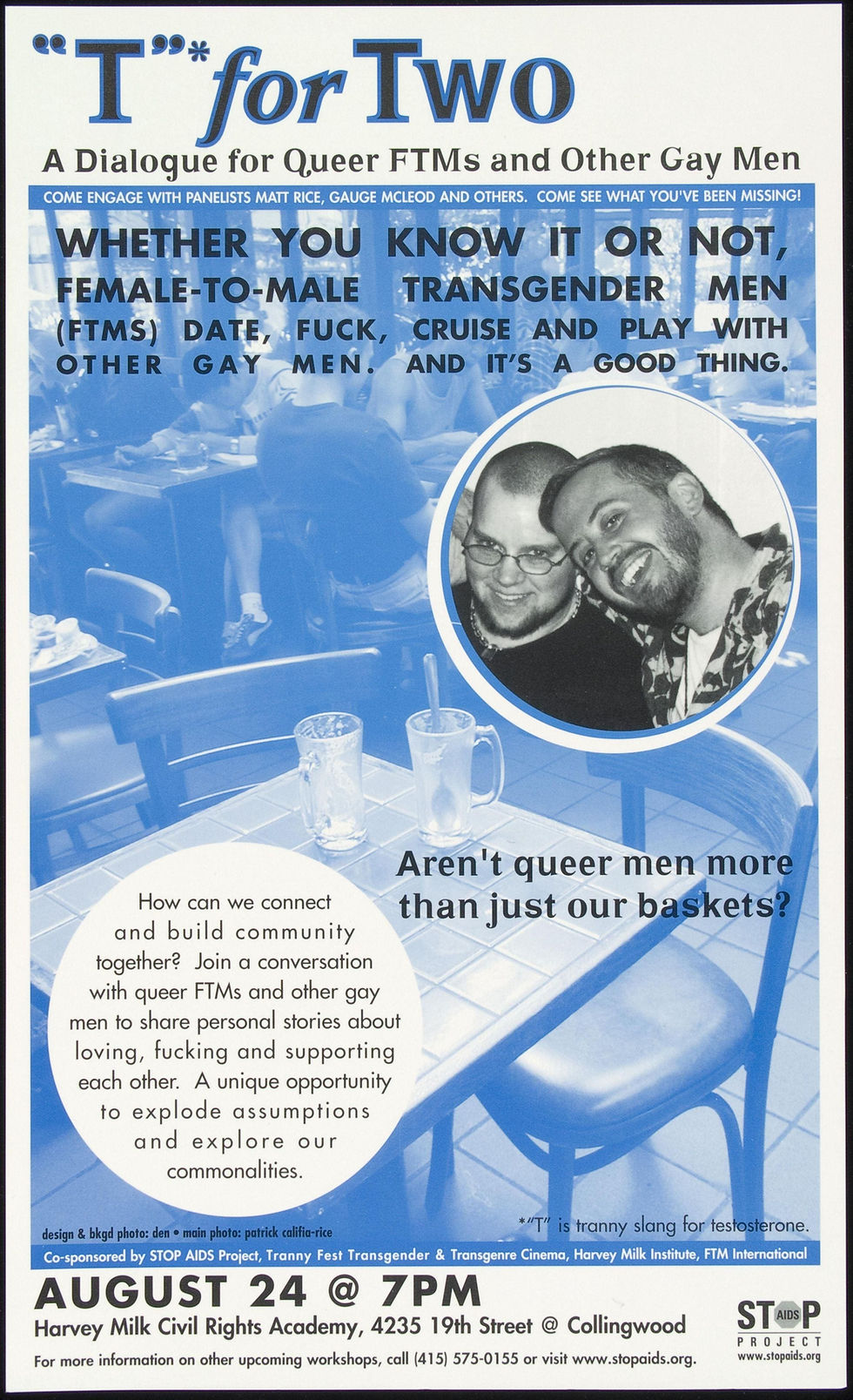


Comments