
Gender Spectrum: Reflections on Transgendered Men and Women in the Islands by Li Anne W. Taft
This article comes from a Summer 2002 edition of Transgender Tapestry, a regular magazine written by and for the transgender, transsexual, and crossdressing community in America. This article addresses two romantic couples, David & Leilani and Matt & Patrick, 3/4ths of whom are FTM, as well as Matt & Patrick's experiences during pregnancy as a trans man.
See below for a transcription of this article.

Transcription:
When David fell in love with Leilani, he was a woman. Born female, a lifelong gender identity struggle troubled Linda and her lesbian relationships. Then, at age 32, guided by a powerful urge for resolution, Linda began taking testosterone and began to appear in public as David —oftentimes with Leilani at his side.
The first year of David’s transition was unsettling for the people in his life, especially Leilani and their oh an a (family and close friends). David became decidedly masculine: he grew a beard, his voice deepened, he had his chest reconstructed, he became more assertive. David was pleased with the changes and especially glad that his relationship with Leilani had changed from that of two lesbians to that of a man and a woman. They remained together throughout the challenging first year.
Female-to-male transsexuals (transsexual men, or trans-men) like David seek to drastically change their female bodies to one that is more male-like. In the process, a sense of peace and inner truth is achieved.
After consultation with a psychologist, a family doctor will often prescribe testosterone. the main agent of physical change for transmen. Due to its high expense ($15,000-$80,000 or even more) and intrusive nature, most transmen don't pursue genital sex reassignment surgery (bottom surgery). Many do have top surgery (breast reduction and construction of a male-appearing chest). A small percentage pursue bottom surgery.
A regimen of testosterone can create pronounced masculine secondary sex characteristics: beards grow and body hair sprouts, voices lower, and fat redistributes. Within several months, most transmen pass well.
Even though most transmen have passing privilege, the transitions of transmen can be uncertain and complicated. Transition is a bumpy road, and personal happiness and fulfillment is not guaranteed. Many transmen are able to find meaningful employment, find a mate, and enjoy a good life. Others find the process slow and difficult and at times feel they are on an unsure path.
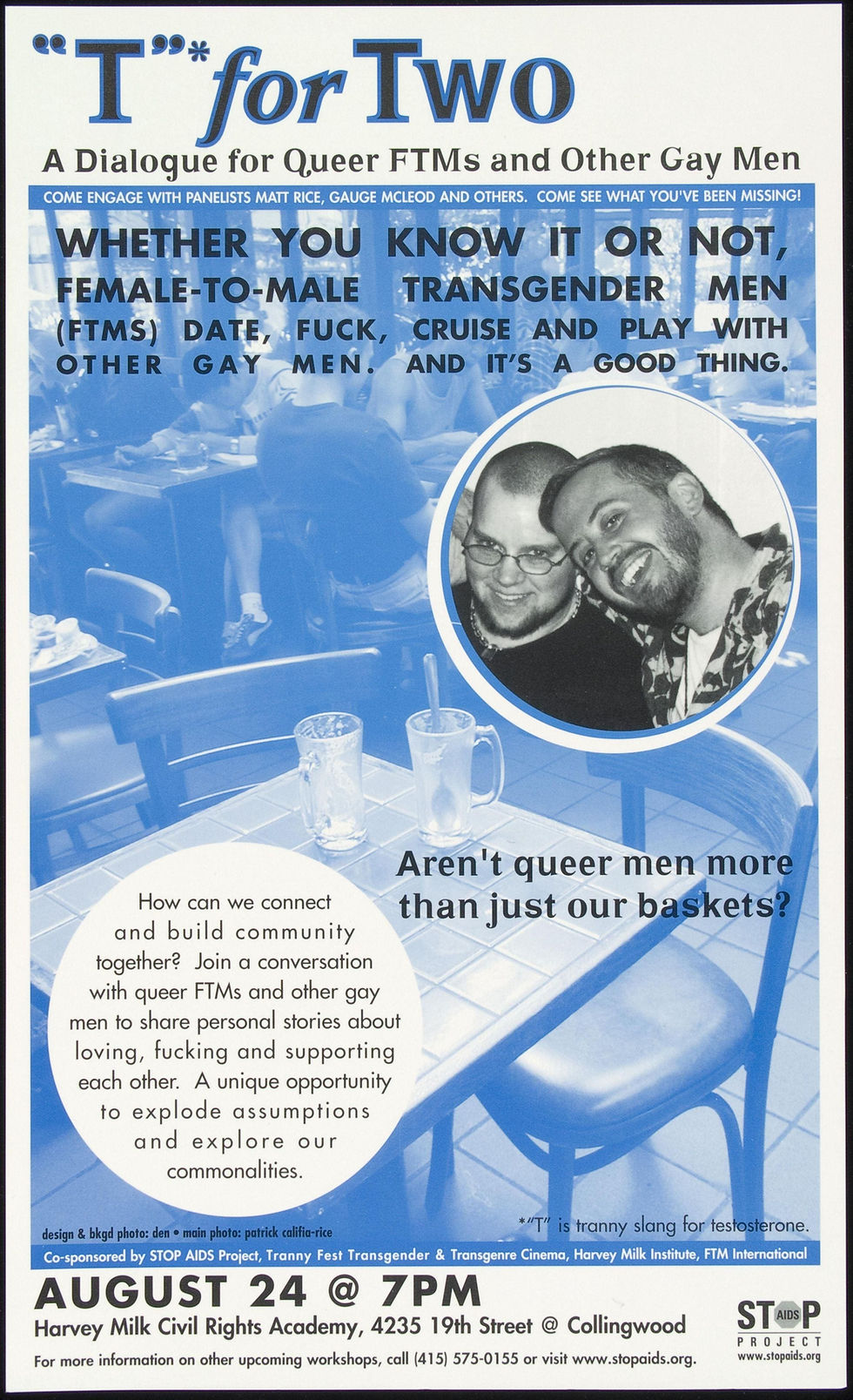
In a recent LA Times article on transgender lifestyles, reporter Mary McNamara interviewed Patrick and Matt Califia-Rice. They had met 10 years earlier as women and shared a common belief that they should be men. They parted soon after Patrick began his difficult gender change journey, but reunited 5 years later. Both now live as men.
Matt and Patrick are a family of three, raising a young son bom to them last year. They told McNamara they had both desired a child and agreed on pregnancy over adoption. Matt, who had not yet had a hysterectomy, stopped taking testosterone and a short while later was artificially inseminated with donor sperm.
As his pregnancy progressed. Matt, a 37-year-old computer network analyst, stated pregnancy “became more difficult, both physically and emotionally” for him. A handsome, bearded man, Matt had “entered the world of morning sickness and water retention.”
Others were challenged by what the transmen were doing. “Matt was very clearly a man when he walked in,“ midwife Kim Touevs reported, “and he was also very clearly pregnant.” Touevs, whose own partner is transgendered, declared that everyone in the birthing class was respectful” and were "waiting to hear what Pat and Matt had to say in the introduction circle.”
A psychotherapist and author of Sex Changes: The Politics of Transgenderism, Patrick brought chocolates to the class. “It’s kind of hard for people to say nasty things after you’ve fed tHm,” he explained. Matt and Patrick lived in San Francisco, one of the largest and most visible transgender communities on the mainland. According to The Times , they were a scandal within that world. Friends and strangers alike were critical of these two gay men who, once women, were becoming parents.
“A lot of female-to-male transsexuals are very invested in seeing themselves as 'real men,”’ stated Patrick, “and they said, ‘Real men don’t have babies.’” But Matt was reported to snap back at his critics, “Real men don’t have hysterectomies, either!” He refuses to be shamed with regard to his life choices.
Neither does David, in Hawai’i. On the lawn of a Waikiki Beach hotel, he stood, handsome in his white tux and ginger lei, his new bride, Leilani, beside him. Two years ago. under swaying palm trees, they posed for their wedding pictures. An announcement by the best man, Leo, brought a round of applause for David’s amazing journey. Leo, David’s best friend and also a female-to-male transsexual, led the wedding guests in a rousing toast “to your marriage as man and woman.” David and Leilani were pleased to hear those words.
Long after David’s and Leilani’s summer wedding, friends and family continued to talk about their enchanted love affair and the way their love and their lives endured such incredible changes.
This article is courtesy of the Internet Archive. All rights belong to the Li Anne W. Taft and Transgender Tapestry. No copyright infringement is intended. The Trans Guy Archive shares this resource on our website for the purposes of education, research, and historical empowerment.
Language: English
Resource type: Magazine article
Format: Image, text
Date published: Summer 2002
Uploaded to TGA: April 23rd, 2026
Last updated: April 23rd, 2026


Comments